How Perfume Bottle Design Shapes the Experience
Examine proportions, closures and labels while keeping visible features separate from provenance.
Published 2026-10-14 · Fragrentis editorial team2 min read
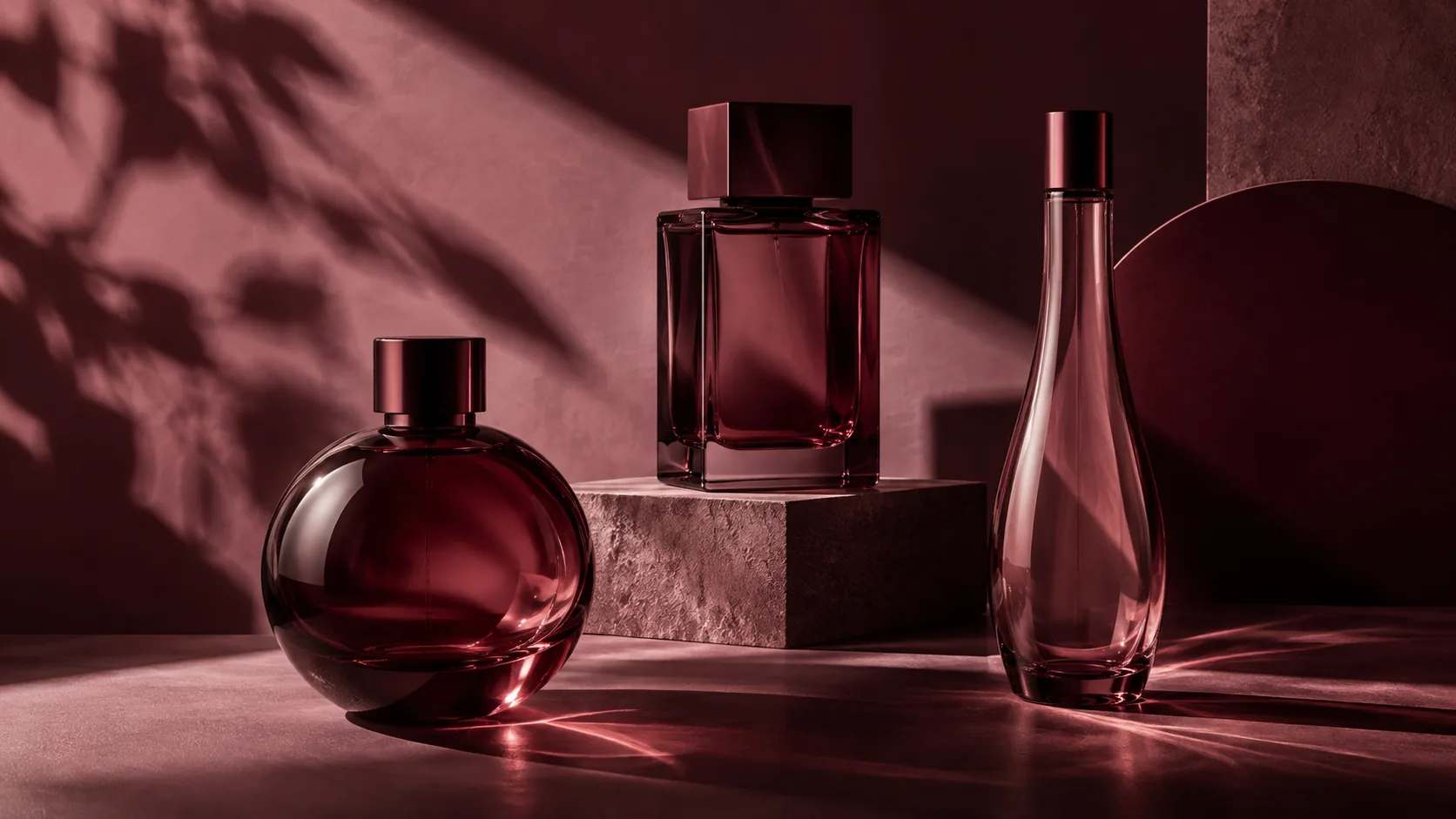
A perfume bottle can be examined as an object without guessing what its shape says about the liquid. Start with what is visible: proportion, material, closure, surface and the relationship between bottle and label. Keeping the observation close to the object makes design discussion more precise than assigning every dark bottle a mysterious scent.
Look at proportion Describe the balance of height, width and the cap. Is the body broad or slender? Does the closure appear visually heavy? Does an asymmetry seem deliberate? These are observations you can make from a clear view. Record the actual item being considered rather than generalizing from a decorative generated illustration.
Separate a bottle's volume from the size it appears to have. Heavy glass, an outer case or a large cap can change the visual impression without establishing how much liquid it contains. Use the product's stated volume for that fact. An apparent resemblance to another design also does not prove who made the item.
Notice the handoff between display and use Consider whether the cap can be handled comfortably, whether the label can be read and whether the object stands securely. Only report an actual handling experience if you had one. A photograph may suggest a question about grip or balance but cannot establish the answer. Do not invent an ergonomic test to make the description more authoritative.
Create an observation card with “visible,” “documented” and “not yet checked” columns. A visible feature might be a ribbed surface. Documented information might be the maker's material description. A question not yet checked might be whether the closure is easy to remove. That separation keeps design curiosity honest.
Add history only with a source If you discuss a designer, launch date or manufacturing technique, use a reliable maker or museum record for the particular object. Do not infer an era from the style alone or label something vintage because the typography looks old. Keep source links beside the catalog entry so a later reader can distinguish attribution from impression.
End with the relationship you found interesting: a simple body with a prominent cap, a readable label on a complex surface, or generous space around a small object. Those observations can be worthwhile without a rarity claim or a prediction of collectible value. The bottle has a design story, but that story becomes clearer when the visible object leads and unsupported provenance stays out of the account.
A Fragrentis editorial publication. Editorial policy and disclosure.